
The Executive's Guide to Mastering Tech Podcasts: 7 Efficient Strategies

Keeping up with tech podcasts is essential for staying competitive. Industry leaders share invaluable insights. But the sheer volume of content is overwhelming. Many professionals fall behind, missing critical trends, strategies, and news. This backlog creates information anxiety.
This guide offers a definitive answer. We present seven proven, high-utility strategies designed for maximum efficiency. You will learn precise, actionable tactics to filter noise, automate your workflow, and build a structured knowledge system. Forget the frustration of an ever-growing queue and master the information flow.
1. Use AI-Powered Podcast Summarization Tools
The biggest obstacle to keeping up with tech podcasts is time. An hour-long episode is a luxury. AI summarization tools offer a direct solution. They transform extensive audio into concise, digestible formats, delivering core value in minutes.
These platforms use advanced AI to analyze transcripts. They identify key themes, extract crucial insights, and compile important takeaways. You get a polished summary as text or a short audio clip. This allows you to absorb critical information without the conversational filler.

Why This Method Works
AI summarization directly tackles information overload. It helps you triage content effectively. You can decide which full episodes are worth your time while still getting essential knowledge from others. This is the highest-leverage strategy for a busy executive.
For example, PodBrief specializes in creating high-quality, AI-driven briefings for leading tech and business podcasts. It ensures you never miss a critical insight from shows like Acquired or The All-In Podcast. Other tools like Otter.ai provide transcriptions, useful for capturing every detail for later review.
Actionable Implementation Steps
- Prioritize Your Top Shows: Select your 3-5 most critical, "can't-miss" tech podcasts. Configure your tool to automatically generate summaries for new episodes.
- Build a Knowledge Base: Use tags or folders to organize summaries by topic (e.g., "AI Developments," "SaaS Growth"). This creates a searchable personal intelligence database.
- Prepare for Meetings: Scan the latest summaries related to an upcoming client or team meeting. Arriving with fresh industry insights provides a strategic advantage.
2. Implement a Curated Podcast Subscription Strategy
The paradox of choice is a major barrier. Subscribing to dozens of shows creates noise, not knowledge. A curated subscription strategy prioritizes quality over quantity. You focus on a handpicked selection of shows aligned with your professional goals.
This method involves deliberately choosing a core group of high-signal podcasts. You must ruthlessly prune the rest. By concentrating on shows that consistently deliver value, you ensure every minute spent listening is a high-return investment. The goal is to eliminate overwhelm.
Why This Method Works
A curated strategy combats "fear of missing out" (FOMO). It ensures you go deep on topics that matter instead of skimming the surface. For instance, a tech executive might subscribe to The Vergecast for broad industry news, Lenny's Podcast for product growth, and Acquired for deep dives on company strategy. This focused trio provides comprehensive insight without fatigue.
Actionable Implementation Steps
- Define Your Core Topics: Identify 3-4 key areas you need to stay current on (e.g., "AI Ethics," "Go-to-Market Strategy").
- Audit and Prune: Review your current subscriptions. Unsubscribe from any show you haven't listened to in the last quarter. Aim for a lean list of 4-8 essential shows.
- Discover High-Signal Shows: Use platforms like Podchaser or Listen Notes to find top-rated podcasts in your niches.
- Conduct Quarterly Reviews: Re-evaluate your core list each quarter. Swap shows to keep your feed optimized for maximum value.
3. Create a Podcast Schedule and Time-Blocking System
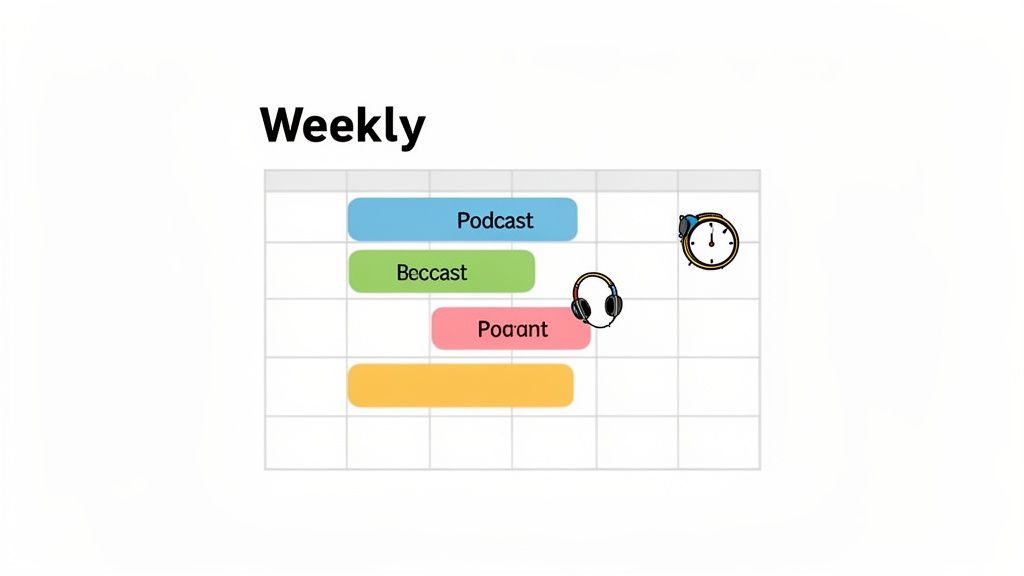
Leaving podcast listening to chance is the fastest way to fall behind. Treat your podcast consumption like any other professional commitment: schedule it. By using a time-blocking system, you deliberately dedicate recurring slots in your calendar for learning.
This method is one of the best ways to keep up with tech podcasts because it builds a predictable routine. Instead of trying to squeeze in episodes, you create dedicated learning windows. This intentionality prevents your queue from overflowing and turns information intake into a reliable habit.
Why This Method Works
Time-blocking leverages proven productivity principles. By assigning a specific time and purpose to podcast listening, you protect your focus. It creates a system for consistent knowledge acquisition, turning an overwhelming backlog into a manageable weekly routine. This structured approach also makes your listening more efficient.
Actionable Implementation Steps
- Identify Learning Pockets: Look for recurring, low-focus activities in your week, like your commute or gym sessions.
- Schedule It Like a Meeting: Create a recurring event in your calendar app titled "Tech Podcast Learning." Treat this block with the same respect as any other appointment.
- Batch Your Content: Spend 15 minutes on Sunday downloading episodes for the upcoming week. This removes decision fatigue.
- Set Reminders: Use your calendar's notification feature to remind you 5 minutes before your listening block begins.
4. Build a Personal Knowledge Management System
Listening is only half the battle. Retaining and using the insights you gain creates real value. A Personal Knowledge Management (PKM) system transforms passive consumption into an active, strategic asset. It converts ephemeral audio into a permanent, personal intelligence resource.
A PKM is a structured process for capturing, organizing, and retrieving information. Using tools like Notion, Obsidian, or Evernote, you can connect ideas from various shows and identify emerging trends. This turns your podcast queue into a source of competitive advantage.
Why This Method Works
This strategy combats knowledge fragmentation. Insights from different episodes can be linked to create a richer, more nuanced understanding. It systematizes learning, ensuring the time you invest yields long-term returns. For example, you can create a Notion database to track episodes, tag them with topics, and link to summaries for quick context.
Actionable Implementation Steps
- Choose Your Tool: Select a PKM tool that fits your style. Notion or Evernote for structure, Obsidian for interconnected graphs.
- Establish a Template: Create a consistent template for new entries. Include fields for the show, episode title, key takeaways, and a link to the summary.
- Implement a Tagging System: Use a consistent set of tags (e.g.,
#VC-Funding,#product-management) to categorize insights. - Schedule Regular Reviews: Set aside time weekly or monthly to review your notes. Look for patterns and connect related ideas.
5. Leverage Podcast Newsletters and Recap Communities
Keeping up with every relevant podcast is impossible alone. Tapping into podcast newsletters and online communities allows you to outsource discovery and filtering. This social curation layer surfaces the most important episodes and discussions chosen by experts.
Instead of scrolling through endless new episodes, you receive curated recommendations. Experts listen, analyze, and highlight the most impactful conversations. This approach saves time and adds social proof, helping you identify which episodes are genuinely creating buzz.
Why This Method Works
This strategy leverages collective intelligence to combat information overload. You gain the perspective of hundreds of listeners without investing the time. Newsletters from outlets like The Verge often recap their shows. Communities like Indie Hackers or specific subreddits host vibrant discussions where members share compelling podcast segments.
Actionable Implementation Steps
- Curate Your Curators: Subscribe to 2-3 high-quality newsletters relevant to your field. Look for those that provide concise summaries.
- Join a Niche Community: Find one active Slack, Discord, or Reddit community where tech podcasts are discussed.
- Create a Centralized Hub: Set up a dedicated email folder or use an app like Feedly to aggregate all your newsletters.
- Connect Curation with Summarization: Use recommendations as a high-quality input list. Run them through an AI tool to get an instant summary, validating their importance before committing an hour.
6. Use Podcast Discovery Algorithms and Apps
Finding new, high-quality tech podcasts can feel random. The solution is to leverage powerful recommendation engines in modern podcast platforms. These algorithms intelligently surface new shows based on your listening history. This automates discovery with minimal effort.
Platforms like Spotify and Apple Podcasts learn your preferences over time. Specialized tools like Podchaser and Listen Notes offer advanced search features to find niche content. By tapping into these systems, you can spend less time searching and more time learning.
Why This Method Works
Discovery algorithms cut through the noise using data. You get a continuous stream of tailored suggestions. This is highly effective for identifying under-the-radar podcasts or finding episodes on a niche topic. For example, Podchaser acts like an IMDb for podcasts, while Spotify's algorithm excels at surfacing chart-topping content.
Actionable Implementation Steps
- Conduct a Quarterly Discovery Audit: Dedicate time once per quarter to explore recommendations. Identify 2-3 new potential subscriptions.
- Filter by Specific Topics: Use tools like Listen Notes to filter by keywords such as "AI in SaaS" or "startup fundraising."
- Test Episodes with Summaries: Before subscribing, use a tool to get an AI-driven briefing of a recommended episode. This vets the content quality in minutes.
- Improve Your Recommendations: Actively rate and review episodes in your podcast app to provide direct feedback to the algorithm.
7. Implement Multi-Format Consumption
Relying solely on audio is a rigid strategy. Consume content across multiple formats, matching the medium to your current context. This flexibility ensures you can absorb insights whether you're commuting, in a deep work session, or catching up between meetings.
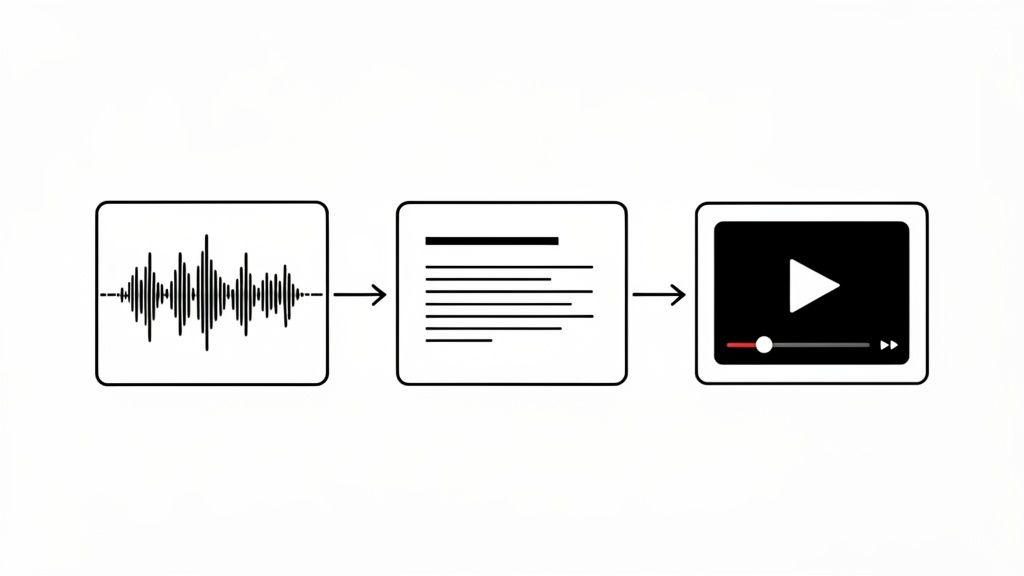
This method involves adapting how you engage with an episode. You might listen to the full audio during a workout, read a text summary at your desk, or watch video clips for a visual explanation. No matter your situation, you have an accessible way to stay informed.
Why This Method Works
Multi-format consumption breaks the "one-size-fits-all" barrier. It acknowledges that different situations call for different tools. For instance, PodBrief provides both concise text and audio summaries for the same episode. This allows you to switch formats seamlessly.
Actionable Implementation Steps
- Assign Formats to Your Calendar: When time-blocking, specify the consumption format. Schedule "Audio Listening" for your commute and "Text Summary Review" for the 15 minutes before a meeting.
- Optimize Your Audio Experience: Use your podcast player’s playback speed controls. Listening at 1.5x or 1.75x can significantly reduce the time commitment.
- Use Text for Precision: During focused work, use text summaries or transcripts to quickly search for keywords or extract data points.
- Leverage "In-Between" Moments: Keep text summaries handy on your phone. Review key insights from a 45-minute podcast in the two minutes you spend waiting for coffee.
The Executive's Workflow: Your Action Plan
Keeping pace with the tech industry feels like drinking from a firehose. This guide has laid out seven powerful strategies to transform that chaos into a structured, high-ROI system. The blueprint is here for turning passive listening into an active intelligence-gathering operation.
The core takeaway is this: the best way to keep up with tech podcasts isn't about listening faster. It's about building a smarter, more efficient workflow. It requires ruthless selection, strategic scheduling, and a personal knowledge base that compounds over time.
Recapping Your Path to Podcast Mastery
Your new workflow should be a deliberate fusion of curation, discipline, and technology.
- Strategic Curation: Move from a "subscribe to everything" mindset to a curated, high-signal list.
- Systematic Consumption: Use time-blocking to dedicate specific, focused slots for podcast engagement.
- Intelligent Automation: Leverage AI-powered summarization tools to get core insights without the fluff.
- Active Knowledge Management: Build a simple PKM system to capture, organize, and retrieve key ideas.
By combining these pillars, you create a flywheel of learning. You spend less time on irrelevant content and more time absorbing and applying critical information. This maximizes the value you extract from every minute invested.
Your Next Steps: From Plan to Action
Information without implementation is noise. To master your podcast queue, you must take action. Here is your immediate, three-step plan:
- Conduct a ruthless subscription audit. Open your podcast app now. Unsubscribe from any show that no longer serves your current objectives.
- Schedule your first "Podcast Block." Look at your calendar for the coming week. Block out two 30-minute sessions dedicated to processing your queue.
- Implement your AI-lever. The single biggest efficiency gain comes from automating summarization. This reclaims hours instantly.
Mastering your information diet is a professional necessity. You now have the tools to build a personalized system that serves your goals, ensuring you never miss a critical insight while protecting your most valuable asset: your time.
Ready to build the ultimate, time-saving podcast workflow? The cornerstone of an efficient system is leveraging AI to do the heavy lifting. PodBrief provides five-minute briefs of any tech podcast, delivered in text or audio, so you get straight to the insights. Start your free trial at PodBrief and reclaim your time today.


