
How to Get Paid for a Podcast: A Practical Guide

Making money from a podcast is not magic; it requires a smart strategy. Creators primarily get paid in three ways: advertising and sponsorships, direct listener support, or by selling products and services.
Most successful podcasters use a mix of these methods. The right approach for your show depends on your audience size, engagement level, and specific niche. This guide outlines the strategies that consistently work.
Your Path to a Profitable Podcast
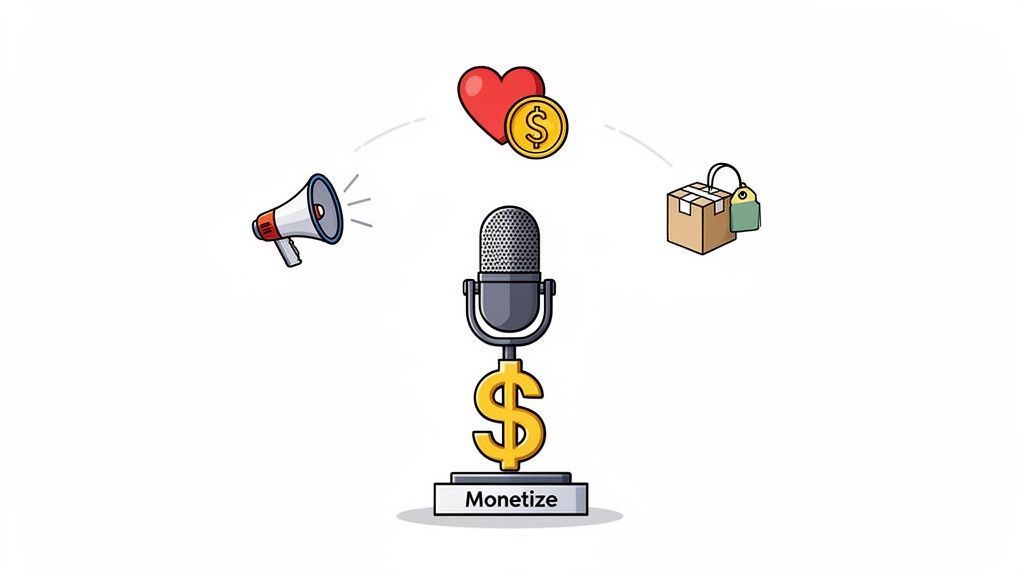
Turning your podcast from a passion project into a revenue stream is achievable. The key is choosing a monetization method that aligns with your content and listeners.
A dedicated, niche audience may prefer exclusive content through a subscription. A show with broad appeal might find programmatic advertising to be the most efficient path to income. This guide breaks down exactly how podcasters get paid with each model.
Podcast Monetization Models at a Glance
This table provides a quick overview of the most common monetization models, their ideal use cases, and realistic earning potential.
| Monetization Method | Best For | Typical Requirements | Earning Potential |
|---|---|---|---|
| Advertising | Shows with 1,000+ downloads per episode | Established audience, consistent downloads | $18-$50 CPM (per 1,000 listeners) |
| Sponsorships | Niche shows with a highly engaged audience | Strong community connection, media kit | $100s - $1,000s per episode |
| Listener Support | Shows with a loyal, dedicated fanbase | Community platform (Patreon/Buy Me a Coffee) | $5-$25+ per supporter, per month |
| Subscriptions | Creators offering exclusive bonus content | Ability to produce premium content consistently | $5-$15 per subscriber, per month |
| Affiliate Marketing | Shows that review or recommend products | Trust and authority with your audience | 5%-30% commission on sales |
| Merchandise | Shows with a strong brand and visual identity | Design ideas, a platform (Shopify) to sell | $10-$20 profit per item |
| Services/Courses | Experts in a specific field or industry | Proven expertise and a clear value proposition | $100s - $1,000s+ per client/sale |
There is a monetization path for nearly every type of podcast. Your task is to identify which combination makes the most sense for your current stage.
Securing Podcast Advertising and Sponsorships
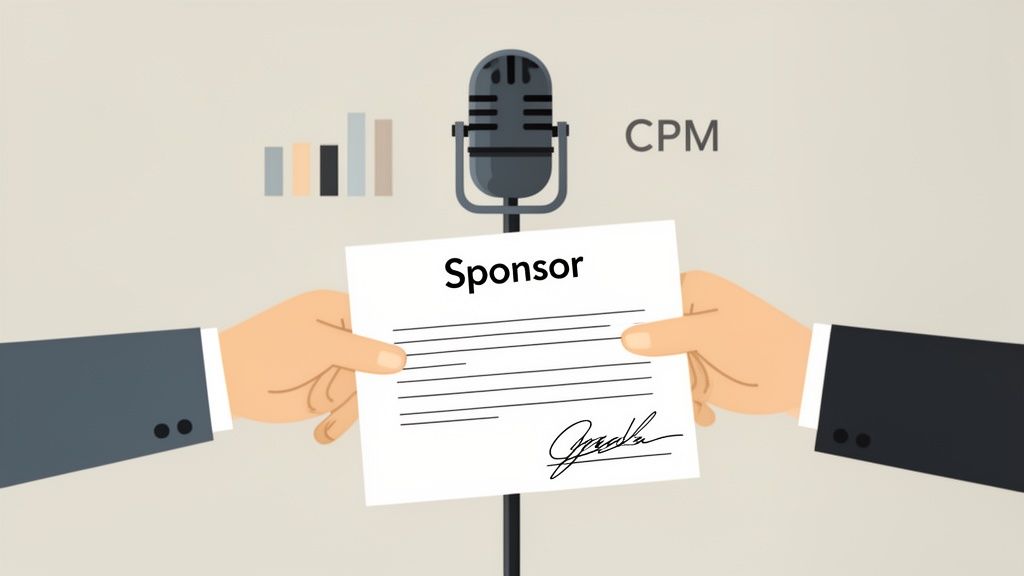
Advertising is the most common path to podcast revenue, but it requires more than just high download counts. To begin, you must understand the metrics that matter to advertisers.
Sponsors focus on CPM, CPA, and overall listener engagement. These figures are the foundation of any serious negotiation.
- CPM (Cost Per Mille): The price an advertiser pays per one thousand downloads. This is the most common pricing model.
- CPA (Cost Per Acquisition): Pays you when a listener takes a specific action, like using a promo code.
- Flat-Rate: A set fee for a specific number of ads, regardless of performance.
Getting a Handle on CPM and CPA
CPM (Cost Per Mille) is how you will forecast most ad revenue. For specialized U.S. podcasts in business or tech, a $25–$50 CPM is a standard range.
CPA is results-driven. It focuses on how many listeners acted on an ad, which can be highly lucrative with an engaged audience.
Picking the Right Ad Format
Ads can be delivered through dynamic insertion or as host-read endorsements. Dynamic ads are inserted automatically, which is efficient but can feel impersonal.
Host-read ads are more effective. When a host personally endorses a product, it builds significant trust with listeners.
The podcast ad space is projected to hit $4.46 billion in 2025. You can find more data on this trend at podcastatistics.com.
| Format | Pros | Cons |
|---|---|---|
| Dynamic Insert | Scales easily with precise targeting | Can feel generic, lower listener trust |
| Host Read | Boosts engagement and feels authentic | Requires more prep time, often commands higher rates |
Should You Join a Podcast Network?
Podcast networks like Megaphone or Acast can simplify ad revenue. They find sponsors, insert ads, and handle billing.
The primary benefit is access to a larger pool of advertisers with less administrative work. The main drawback is reduced creative control. Many established podcasters use a hybrid approach to maximize benefits.
How to Price Your Ad Slots
Setting ad rates is based on audience size, niche, and listener engagement. A base $30 CPM is a good starting point. Adjust your rate based on these factors:
- Download velocity and listener demographics.
- Episode length and ad placement (pre-roll, mid-roll, post-roll).
- Past campaign performance data.
For a business podcast with 5,000 downloads per episode, you could charge around $150 for a 30-second mid-roll spot. A tool like PodBrief can summarize listener trends for you. To build a media kit showcasing this data, read our guide on show notes and analytics.
Crafting a Sponsorship Pitch That Actually Works
Your pitch must be direct and focus on ROI. Show sponsors how your audience is their ideal customer.
- Use a clear, concise subject line.
- Lead with key audience demographics and download numbers.
- Propose a specific ad format and placement.
- Suggest a timeline and success metrics.
For example, if pitching a SaaS company, highlight that 70% of your audience works in the tech industry. This is a powerful hook.
Negotiating the Terms of Your Deal
Once a sponsor shows interest, it's time to negotiate. This process sets clear expectations to protect your show and the brand relationship.
Pro Tip: Offer a sponsor category exclusivity for a set period. This justifies a premium rate and demonstrates partnership.
Ensure your agreement outlines:
- The number, length, and delivery dates of ads.
- A clear payment schedule with deadlines.
- Bonus clauses for hitting performance milestones.
- Terms for cancellation, renewal, and scope of deliverables.
To simplify this, download our sample outreach template at podbrief sponsorship template.
Don't Forget the Legal and Tax Stuff
Treat every sponsorship as a formal business agreement. Get everything in writing.
Consult a tax professional to understand income reporting and deductible expenses.
- Send professional, itemized invoices.
- Keep detailed records of all podcast-related expenses.
- Set aside a portion of earnings for quarterly estimated taxes.
Proper record-keeping is professional and essential for tax compliance.
Tracking Campaign Success
After an ad runs, the work continues. To build long-term sponsor relationships, you must demonstrate value.
Use podcast analytics to report on downloads, clicks, and conversion data.
- Send your sponsor a weekly or monthly performance report.
- Proactively suggest campaign optimizations.
When you back up your podcast's value with hard data, sponsors are more likely to renew.
Turning Listeners into Supporters
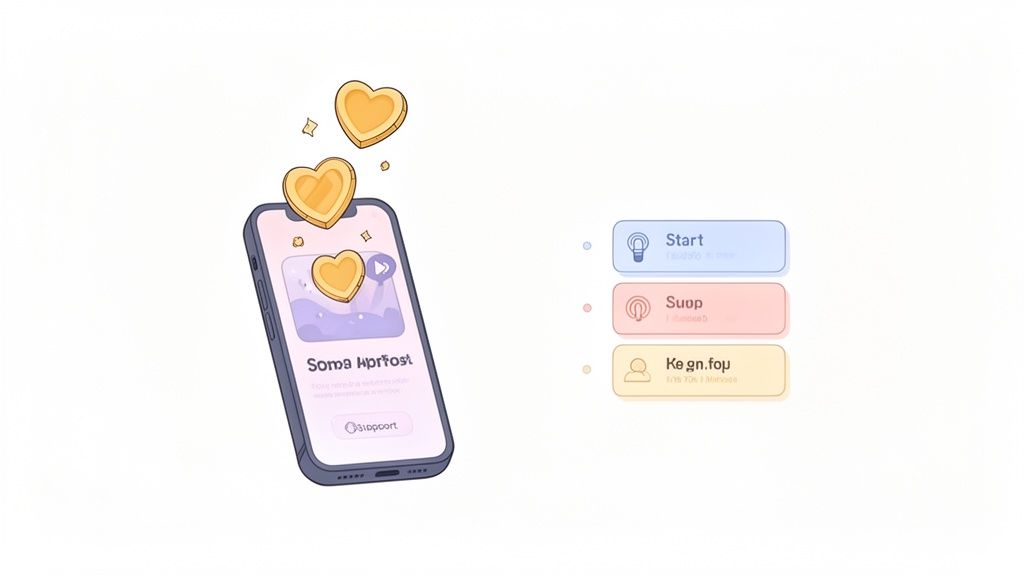
While sponsorships are about numbers, direct listener support is about connection. This model provides a predictable and rewarding revenue stream from your most loyal fans. You are building an active community invested in your success.
The real value comes from a membership or subscription program that offers exclusive benefits. For many niche podcasters, this approach is more sustainable than constantly seeking ad revenue.
Why People Pay for Podcasts They Already Get for Free
Listeners pay for a connection with creators they value. They are not just buying content; they are investing in you and the community you have built. Your biggest fans want you to succeed.
The key is to make them feel like insiders. Exclusive perks validate their support and deepen their connection. This model is built on reciprocity, not just transactions.
Bottom Line: A small group of paying supporters can be more valuable than a massive, passive audience. Focus on loyalty, and financial support will follow.
How to Structure Your Membership Program
To convince listeners to pay, you must offer compelling value. Design a membership program with clear tiers and benefits that feel exclusive.
Here is a simple tiered structure:
- Supporter Tier ($3-$5/month): An entry-level option. Offer an ad-free version of your show, early access to episodes, or a shout-out.
- Insider Tier ($10/month): Offer something more substantial. Provide exclusive bonus episodes, behind-the-scenes videos, or access to a private Discord community.
- Superfan Tier ($25+/month): For your most dedicated fans. Benefits could include a monthly Q&A livestream, exclusive merchandise, or a personal 15-minute call.
This structure allows supporters to choose a level that fits them, with a clear value proposition at each step.
Picking the Right Platform for Your Program
Several platforms can help you manage memberships and payments. Choose one that fits your specific needs.
| Platform | Best For | Key Features |
|---|---|---|
| Patreon | Creators who want an all-in-one community and payment tool. | Tiered memberships, community posts, Discord integration, merchandise tools. |
| Memberful | Podcasters looking to integrate memberships directly into their own website. | Private podcasts, custom branding, deep integration with WordPress and other tools. |
| Supercast | Those focused specifically on selling premium, private podcast feeds. | Seamless integration with popular podcast apps, subscriber analytics, simple setup. |
| Apple Podcasts Subscriptions | Creators aiming to sell premium content directly within the Apple ecosystem. | Integrated user experience for Apple users, simplified payments. |
Patreon excels at community building, while Supercast is streamlined for delivering private audio. Your choice will shape your listeners' premium experience.
How to Ask for Money Without Sounding Salesy
Asking for money can be uncomfortable. However, when done correctly, promoting your membership can strengthen your community. Be transparent and focus on the value you provide.
Mention your program regularly on the show, but avoid a hard sell. Explain why you launched a membership and what support enables you to do. Share testimonials from current members and offer previews of exclusive content.
Direct listener support is a significant revenue engine. Podcasters with 10,000 monthly listeners often convert 1-5% into paying members. At a $5 tier, that’s $5,000 to $25,000 annually. Read more about the rise of direct listener support in recent podcast statistics.
Expanding Your Income with Products and Services
Your podcast is a platform that proves your expertise. You can build entire revenue streams on this authority that are separate from ads or donations. This shifts your mindset from podcaster to business owner.
This is about selling your expertise directly to your trusted audience. Instead of renting their attention to sponsors, you offer direct solutions. This can increase your earnings from cents per listener to thousands per customer.
Selling Your Knowledge with Digital Products
Digital products are an ideal monetization model for podcasters. You create them once and sell them indefinitely with minimal overhead and no inventory.
- Ebooks and Guides: Package your knowledge on a frequently requested topic. A personal finance podcaster could sell a "Debt Reduction Blueprint."
- Online Courses: For in-depth topics, create a structured online course. A tech podcaster could offer a masterclass on a new software.
- Templates and Tools: Sell shortcuts your audience values. A marketing podcaster could offer proven social media content templates.
Listen to your audience. Their questions and feedback often reveal what they are willing to pay for.
Offering High-Value Services
Your podcast serves as powerful marketing for high-ticket services. It builds trust and pre-sells your expertise, qualifying potential clients before you even speak with them.
A leadership podcast can be a direct funnel for executive coaching clients. A real estate investing show host can offer paid one-on-one strategy sessions. In this model, your podcast builds trust at scale.
Bottom-Line Insight: When you sell a service, your podcast is not the product; it's the proof. Each episode acts as a free consultation, showcasing your expertise.
Monetizing Your Brand with Merchandise
Merchandise can be a solid revenue stream for shows with a strong brand and an engaged community. This works best with a catchy name, inside jokes, or a tagline that connects with listeners.
Go beyond a simple logo on a t-shirt. Offer branded items like coffee mugs, notebooks, or stickers that fit your audience's lifestyle. Use print-on-demand services like Printful or Teespring to start without upfront investment.
Promoting Your Products Authentically
To promote your offerings without alienating your audience, weave them naturally into your content.
When discussing a common challenge, you can mention, "I cover this solution in chapter three of my ebook." You can also create valuable free resources, like our guide on creating effective podcast show notes, that lead to your paid offerings.
Diversifying your income with products and services is about owning your audience relationship. It transforms your podcast into a sustainable business. To get an AI-briefing of podcasts discussing this topic, try PodBrief for free at podbrief.io.
Getting Your House in Order Before You Monetize
Before pitching sponsors or launching a membership, you must build a solid foundation. This involves presenting your show as a serious business opportunity. Skipping these steps will hinder your monetization efforts.
Know Your Numbers, Inside and Out
Data is the language of business. You must speak in metrics that demonstrate a clear return on investment for potential partners.
Have a firm handle on these key numbers:
- Unique Downloads Per Episode: Focus on downloads within the first 30 days of release. This is the primary metric advertisers care about.
- Listener Demographics: Know the age, gender, location, and interests of your audience. Your podcast host's analytics dashboard provides this data.
- Download Velocity: A high number of downloads in the first 48 hours signals a loyal, subscribed audience.
- Audience Retention: High retention rates prove listeners are engaged, which is crucial for selling mid-roll ad spots.
Build a Killer Media Kit
Your media kit is your podcast's resume. It is a one or two-page PDF that gives potential sponsors all necessary information at a glance. A professional media kit makes it easy for a brand manager to say "yes."
Here are the essential components of a media kit. These elements are non-negotiable.
Media Kit Essential Components
| Component | What to Include | Why It's Important |
|---|---|---|
| Show Overview | A punchy, one-paragraph summary of your show, your niche, and who you make it for. | It immediately tells them if they're in the right place and if your audience aligns with theirs. |
| Host Bio | A short bio with a professional headshot. Play up your expertise and why you're a trusted voice. | It builds a human connection and establishes credibility. People buy from people they trust. |
| Key Metrics | The big numbers: downloads per episode (30-day), key listener demographics, social media followers. | This is the hard data they need to justify their ad spend. Don't skip this. |
| Sponsorship Options | A simple menu of what you offer (pre-roll, mid-roll, etc.) with your pricing (CPM or flat rate). | It removes the guesswork and makes it easy for them to see how they can partner with you. |
| Contact Information | Your name, email, and a direct link to your website. | Don't make them hunt for it. Give them a clear path to get in touch and start a conversation. |
Nail Your Outreach Strategy
With your media kit prepared, identify the right partners. Do not send generic mass emails. Your approach must be personal and focused on the value you provide to their brand.
Create a list of 10-15 dream brands that are a perfect fit for your audience. Research sponsors of other podcasts in your niche. You can use PodBrief to get AI-briefings of competitor shows to identify their sponsors.
Pro Tip: Your first email's only goal is to start a conversation. Keep it brief, attach your media kit, and suggest a quick call.
Get Your Legal and Tax Ducks in a Row
Once money is involved, you are running a business. Act like it from day one to avoid future problems.
- Make it Official: Consider forming an LLC to protect your personal assets. Services like LegalZoom can simplify this process.
- Put it in Writing: Never work on a verbal agreement. Use a contract that outlines deliverables, payment terms, and key dates.
- Track Everything: Open a separate business bank account. This simplifies tax preparation. Consult a tax professional for guidance.
This groundwork separates successful podcasters from those who struggle. You'll approach monetization from a position of strength. As you organize your content for sponsors, a written record is invaluable. Read our guide on creating a transcript for your podcast.
Your Monetization Quick-Start Guide
This section provides a clear, scannable plan to start monetizing your podcast. This is your rapid-review checklist, focusing on the foundational pillars that support a real revenue stream.
The flowchart below outlines the process, from building an audience to securing your first payment.
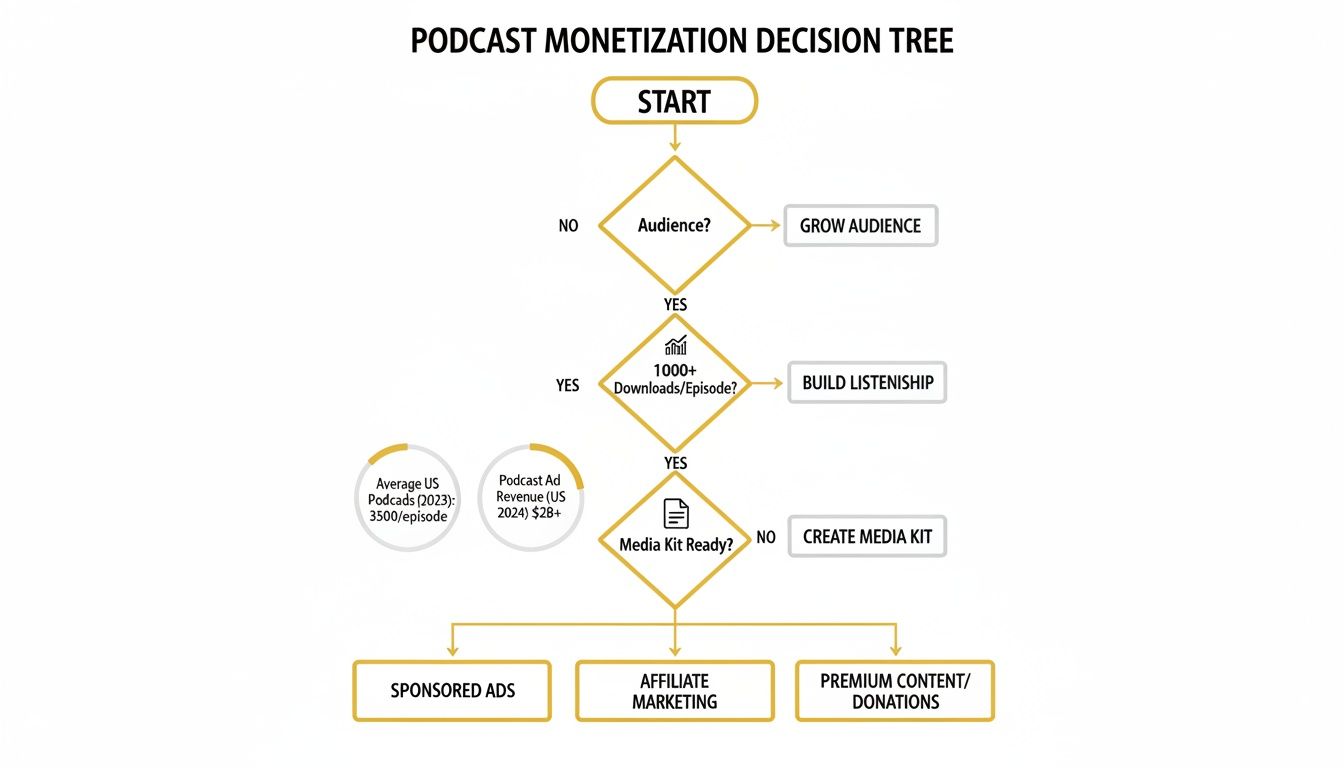
It all starts with your audience. Once you have a listener base and professional materials like a media kit, income opportunities will follow.
Your Action Plan
Follow these deliberate steps to build a sustainable business from your podcast.
- Define and Understand Your Audience: Know exactly who you are talking to. Analyze your hosting analytics for listener demographics. This insight is the currency you will trade with sponsors.
- Track Your Core Metrics: The most important metric is downloads per episode within the first 30 days. Focus on growing this number consistently to prove momentum.
- Build a Professional Media Kit: This is non-negotiable. Create a clean, one-page PDF covering your show's summary, host bio, listener stats, and sponsorship packages. This signals professionalism.
- Start with One Monetization Method: Do not juggle multiple methods at once. Master one stream, like affiliate marketing, before adding another. Focus is your advantage.
The Bottom Line: Successful monetization is the result of knowing your audience, creating consistent content, and treating your podcast like a business. Nail these fundamentals, and revenue will follow.
Staying on top of industry trends is crucial for growth. I use PodBrief to get AI-powered briefings of top business and marketing podcasts, which saves a significant amount of time. Try PodBrief for free at podbrief.io today.
Your Podcast Monetization Questions, Answered
Here are direct answers to common questions about getting paid for a podcast.
"How Many Downloads Do I Actually Need to Start Making Money?"
The answer depends on your strategy. For traditional advertising, 1,000 downloads per episode is a key milestone. This is when you can attract smaller sponsors and make affiliate marketing worthwhile.
However, you can start sooner. With a loyal community, listener support is a viable option. Just 200 fans paying $5 a month on Patreon generates a steady $1,000 in monthly income, independent of download stats. Focus on connection first.
"Should I Join a Podcast Network?"
A network can be a shortcut to ad revenue. They have sales teams and technology to place ads, freeing you to create content. The network will take a cut, typically 30% to 50% of the ad revenue.
The trade-off is control. You will have less say in sponsors and ad types. If you want to offload sales, a network can be a great partner. If you prefer to control your brand and keep all revenue, stay independent.
"What are the Biggest Mistakes People Make When Monetizing?"
Most monetization mistakes are avoidable. Here are the most common ones:
- Putting it Off: Do not wait for a "big enough" audience. Start with affiliate links or a donation page from your first episode.
- Doing Too Much, Too Soon: Trying to launch ads, a subscription, and merchandise simultaneously leads to burnout. Master one revenue stream before adding another.
- Selling Yourself Short: Your influence is valuable. Research standard CPM rates in your industry and price your offerings with confidence.
The single biggest mistake is treating monetization as an afterthought. It must be part of your strategy from the beginning, feeling like a natural extension of the value you provide.
Keeping up with monetization trends is key to growth. PodBrief gives you a leg up by delivering AI-powered summaries from top business and marketing podcasts, so you get the essential insights without spending hours listening.


