
How Successful People Think: The Mental Models of Top Performers


What separates top performers from everyone else? It isn't just working harder. The secret is how they think—their ability to process information, make smart decisions, and see the world differently. Their success is built on a specific mental architecture you can learn.
This guide reveals the mental operating system of high achievers. We'll cover specific, actionable patterns you can use today. The goal is to shift you from reacting to challenges to proactively navigating them with a clear, principle-based approach.
The Architecture of Elite Thinking
Success starts with a specific mindset. It’s built on optimism, a sense of control, and a clear set of principles. These pillars create a resilient and forward-thinking mental framework.
These three pillars reinforce each other. They create a mental framework built for sustained success. Let's break them down.
Cultivating Strategic Optimism
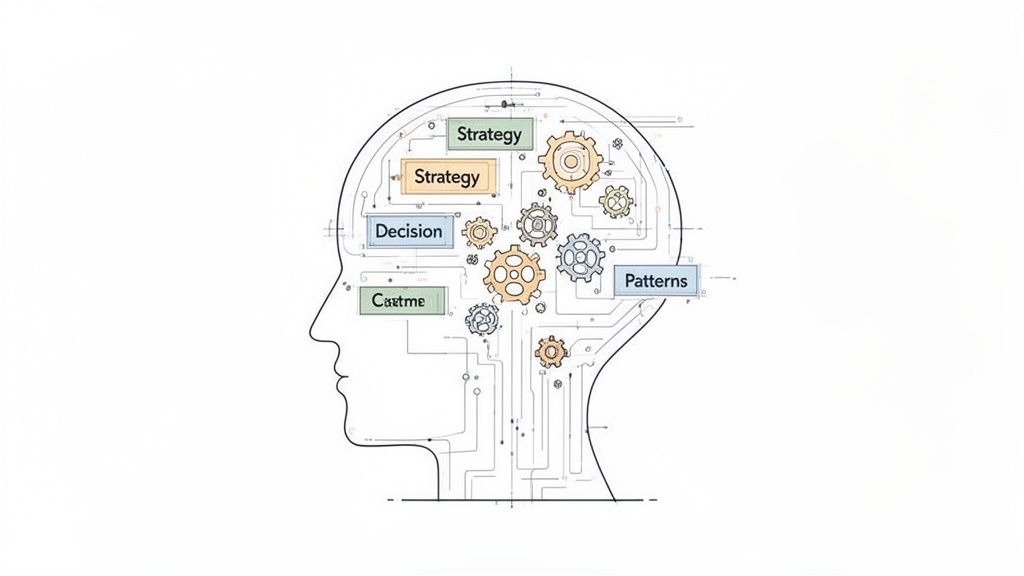
The single greatest predictor of professional success isn't talent or experience. It's optimism.
This isn't blind positivity. High achievers practice dispositional optimism—a core belief that good things will happen. They use it as a strategic tool. It allows them to view setbacks as temporary lessons, giving them the resilience to push forward.
This mindset doesn't ignore reality. It consciously focuses on solutions with a firm belief that a path forward exists.
The Data Behind the Mindset
A study of 350,000 people found optimism was the top predictor of professional success. Optimists secured jobs faster and saw their income grow 15% more over five years. Colleagues also rated them as more charismatic, boosting their leadership potential.
The bottom line: Developing strategic optimism is a direct investment in your career. You can learn more about the thinking patterns of successful people to see how these traits connect.
They Believe They're in the Driver's Seat
Successful people operate with a unique sense of agency. This isn't arrogance. It's a deep-seated belief that they are the architects of their own lives. Psychologists call this an internal locus of control.
They believe their choices—not luck or fate—shape their results. When things go wrong, their first instinct isn't to blame others. They ask, "What can I do differently?"
This is a profound shift from "This is happening to me" to "What am I going to do about this?" It fuels their decisiveness and resilience. Mental health studies show this trait is dominant in 80% of high achievers and links to perseverance rates 50% higher than those who blame external forces.
For more on this, see this great breakdown of the mindset of successful people from MentalHealth.com.
Building a High-Connectivity Brain
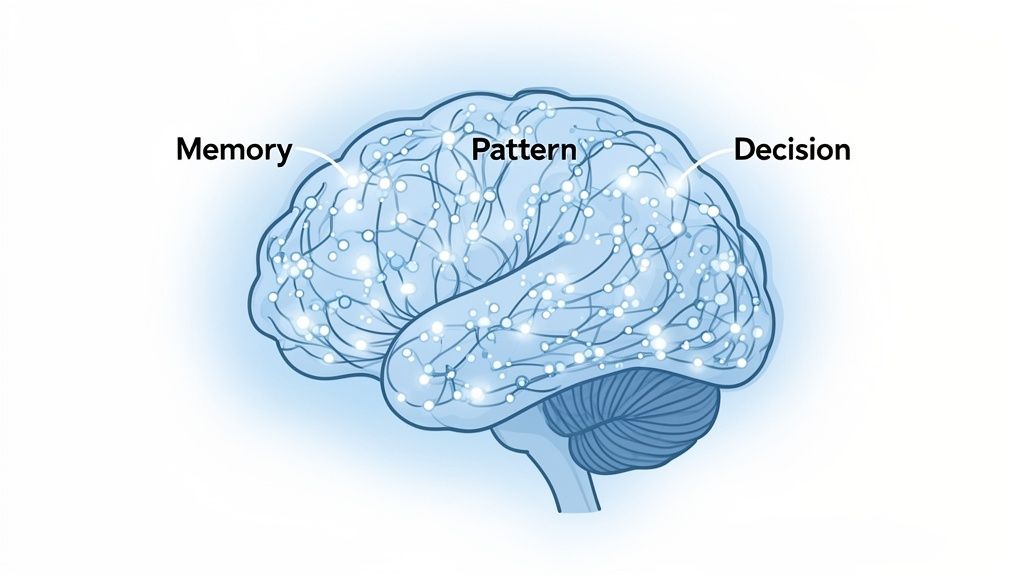
Success is also a state of the brain. The most accomplished people have denser neural wiring. This means their brains are faster and more efficient at connecting ideas, recognizing patterns, and making sharp decisions.
The good news? You can build a better-wired brain through deliberate learning.
A landmark study found that people with more connections in key brain regions didn't just have better memories—they also earned more. Those with 20-30% more connections in the brain's "executive function" hubs had 15-25% higher median incomes.
You can dig deeper into what brain scans reveal about successful people to get the full picture. Absorbing insights from top thinkers is one of the best ways to build these connections. A tool like PodBrief solves this by delivering AI-briefed summaries from expert podcasts, helping you build that high-performance brain without the time commitment.
Putting Elite Thinking into Practice with Frameworks
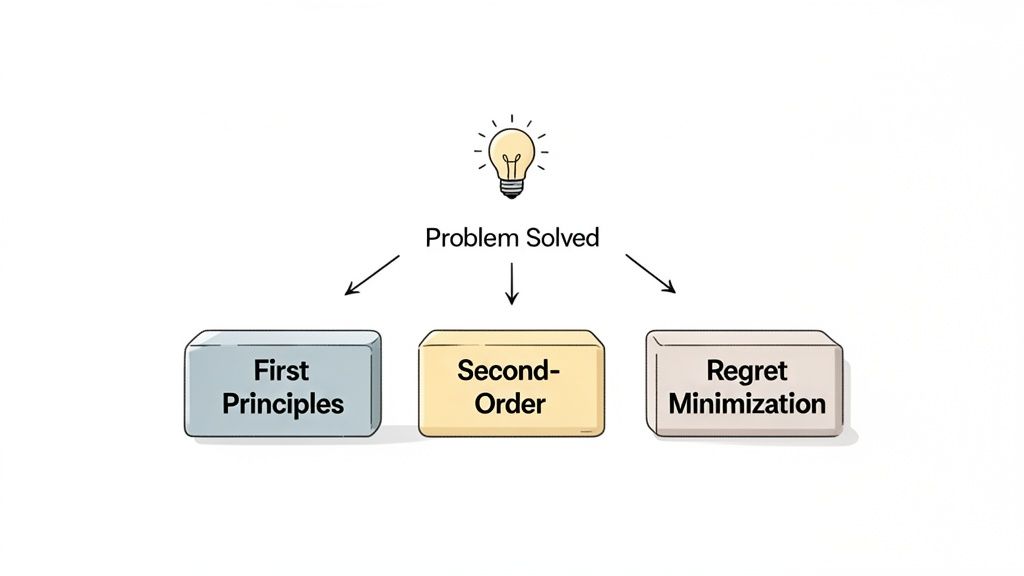
Knowing the right mindset is one thing. Using it to get results is another. Successful people use structured mental models to deconstruct complex problems and make clear decisions under pressure.
Think of these frameworks as your cognitive toolkit. They help you cut through the noise and focus on what truly matters.
First-Principles Thinking
Most people reason by analogy—doing things because that's how they've always been done. First-principles thinking is different. It's about breaking a problem down to its most fundamental truths.
It forces you to ask: What am I absolutely certain is true here?
Once you establish that foundation, you can build new, innovative solutions from the ground up. It’s one of the most powerful knowledge management best practices for anyone serious about solving hard problems.
How to Start Thinking Differently Today
Rewiring your brain isn't an overnight fix. It requires building small, consistent habits that create real momentum. Here are a few ways to start.
Build Your Mental Toolkit
- Mental Model Daily Drill: Pick one framework. Spend five minutes applying it to a current problem.
- Weekly Optimism Review: Look back at any setbacks. Pinpoint the hidden lessons.
Cultivate a Sense of Ownership
At the end of each day, journal the answer to one question: "What’s one outcome today that I took complete ownership of?" This small act trains you to see your own agency.
Absorb High-Quality Insights
Feeding your mind with high-level thinking accelerates growth. But finding the time is a challenge. It's easy to face podcast information overload when trying to keep up. Getting AI-powered briefings lets you absorb core insights without wading through hours of content.
Frequently Asked Questions
Making a real shift in how you think takes time. Let's tackle some common questions.
How can I be optimistic without ignoring real problems?
The goal is strategic optimism, not blind positivity. Acknowledge the issue, then immediately pivot your thinking toward solutions. Ask yourself: "What's the first step I can take to make this better?" Effective people spend 90% of their energy on solutions.
Is an internal locus of control the same as self-blame?
No. There is a critical difference between ownership and blame. An internal locus of control means taking responsibility for your response, even when events are out of your control. You don't blame yourself for a market shift; you own your part in preparing for it and adapting to it.
How long does it take to change my thinking patterns?
It's a marathon, not a sprint. Research on neuroplasticity shows that with consistent, daily practice, new neural pathways can start forming in just a few weeks. After 60 to 90 days of focused effort, you’ll find these new ways of thinking become your default setting.
"Change alone doesn’t bring growth but you cannot have growth without change." - John C. Maxwell
You must be intentional. It's an active, daily choice to see things differently until that new perspective becomes second nature.
Stop wading through hours of podcasts to find key insights on high-performance thinking. PodBrief delivers AI-powered briefings that distill expert knowledge into actionable summaries. Absorb powerful mental models faster and build a successful mindset. Try it for free at podbrief.io and start today.


