

Stop Searching, Start Learning: Your Math Channel Shortlist
You need a math explanation that works now. Maybe you’re cramming for an exam, fixing a weak foundation, or trying to understand a concept that keeps breaking your momentum. YouTube can solve that fast, but only if you pick the right teacher the first time.
Many users don’t have a math problem. They have a filtering problem. Too many channels. Too many styles. Too much time wasted on videos that are either too shallow, too slow, or totally misaligned with the goal.
This guide gives you the high-utility shortlist. These are the best math YouTube channels for specific outcomes: foundations, college-level depth, recreational curiosity, proof-based thinking, and applied stats. Use it like a decision tool, not a popularity contest. If a lecture is long, summarize it later with PodBrief instead of rewatching the whole thing.
1. 3Blue1Brown
If you want to understand why math works, start with 3Blue1Brown.
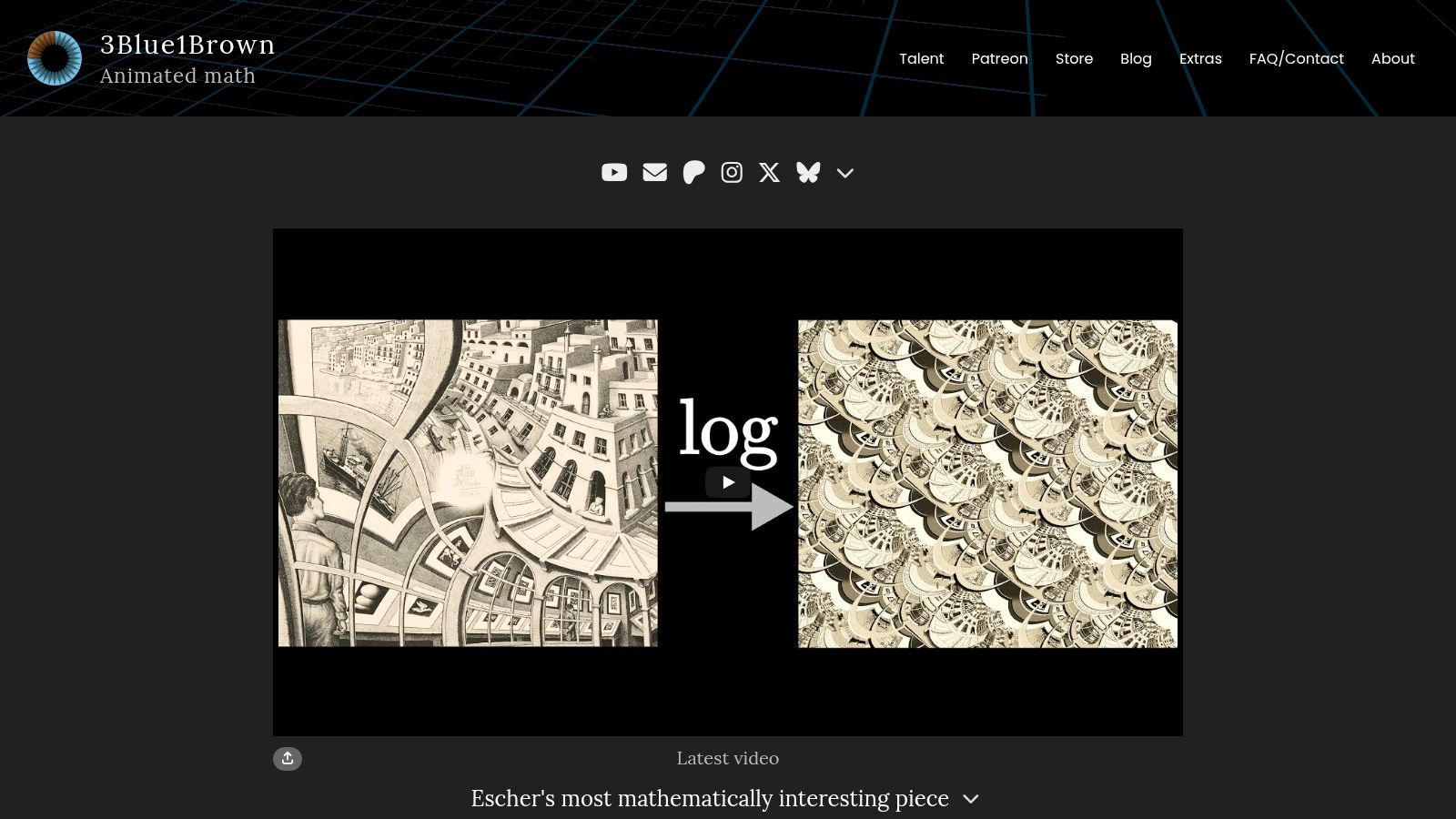
Grant Sanderson built the channel into one of YouTube’s biggest math destinations. As of early 2026, it had over 6.3 million subscribers and 450 million total views on YouTube’s official channel page, making it a clear benchmark for visual math teaching (YouTube channel).
Best for conceptual breakthroughs
Use this channel for linear algebra, calculus, neural networks, probability, and any topic where symbols alone aren’t clicking. The animations make abstract ideas feel spatial and concrete. That’s its main benefit.
The flagship series are the reason to begin here. Essence of Linear Algebra pulled 25 million views, and Essence of Calculus passed 40 million views on the same official YouTube channel reference. Those series are ideal when you want intuition before drilling exercises.
- Best use case: Learn the core idea behind a topic before you open your textbook.
- What it does well: Builds mental models that stick.
- What it won’t do: Walk you through lots of routine homework problems.
Practical rule: Watch 3Blue1Brown first when a chapter feels abstract. Watch something example-heavy second.
If you also like visual explanations in nearby subjects, PodBrief’s guide to best YouTube channels for physics is a strong next stop.
2. Numberphile
You have 20 minutes, your textbook feels dead, and you need a reason to care about math again. Use Numberphile.
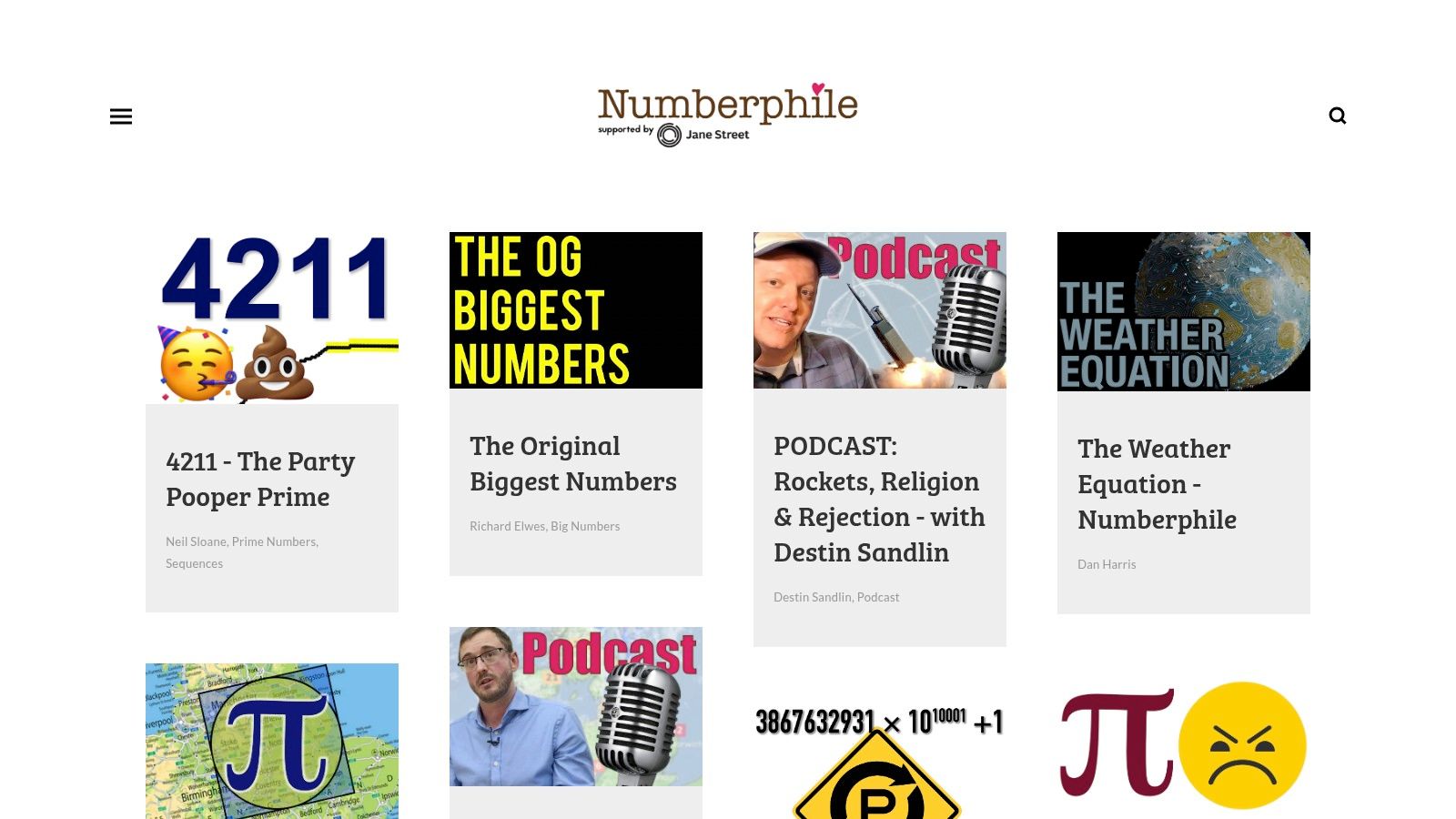
Numberphile works best as the recreational branch of your learning plan. It pulls you in with puzzles, paradoxes, famous problems, weird number patterns, and interviews with mathematicians who make the subject feel alive. If 3Blue1Brown gives you visual intuition and Khan Academy gives you sequence, Numberphile gives you curiosity. That matters, because curious learners stick with hard topics longer.
Best for curiosity, motivation, and mathematical culture
Use this channel for three specific goals.
- Restart your interest: Watch it when you’re tired of drills and need a fast reminder that math is bigger than homework.
- Get context: The channel is strong on stories, people, and the strange corners of the subject that regular courses skip.
- Explore before you commit: Sample a topic here, then decide whether it deserves serious study elsewhere.
Be strict about how you use it. Numberphile is not your main channel for mastering algebra, calculus, or proof-based courses. It is your fuel source.
A smart workflow looks like this: watch one Numberphile video on a topic that catches your attention, write a 3-line summary, then move to a structured channel to learn the machinery. If the video is long, use one of these podcast and audio learning tools to summarize the key ideas before you spend an hour chasing side paths.
Practical rule: Use Numberphile to choose what to study. Use a structured channel to actually learn it.
If you enjoy broad scientific storytelling, PodBrief’s roundup of the best science channels on YouTube pairs well with this one.
3. Khan Academy
You have 30 minutes, a weak algebra base, and no patience for hunting through random videos. Use Khan Academy. It is the best channel in this list for learners who need order, repetition, and a clear starting point.
Best for foundations and structured self-study
Khan Academy works best for one job: rebuilding core math without wasting time. If your gaps are in arithmetic, pre-algebra, algebra, geometry, trigonometry, or early calculus, start here before you touch the more advanced channels in this guide.
The strength is simple. The lessons are organized in sequence, the explanations stay consistent, and the pace suits people who need to relearn skills step by step. That makes it a strong fit for high school students, adult learners returning to math, and college students fixing weak prerequisites.
Use it with a clear goal:
- Build foundations: Start at the first unit you cannot do confidently and move in order.
- Review for class: Use the channel to patch a specific weakness before lectures or homework.
- Prepare for harder channels: Finish the basics here, then move to Professor Leonard for full course support or 3Blue1Brown for intuition.
Be disciplined about the format. Do not bounce between random topics because the videos are short. Pick one course, complete one unit at a time, and solve problems off YouTube after every lesson. If a lecture series feels too long, use one of these podcast and audio learning tools to summarize the main ideas first, then watch only the lessons that cover your actual weak spots.
Khan Academy is not the channel for proof-heavy upper-level math or mathematically playful exploration. It is your repair shop. If your goal is to get competent fast, that is exactly what you need.
4. Stand-up Maths
Some channels teach math. Stand-up Maths makes you want to chase it.
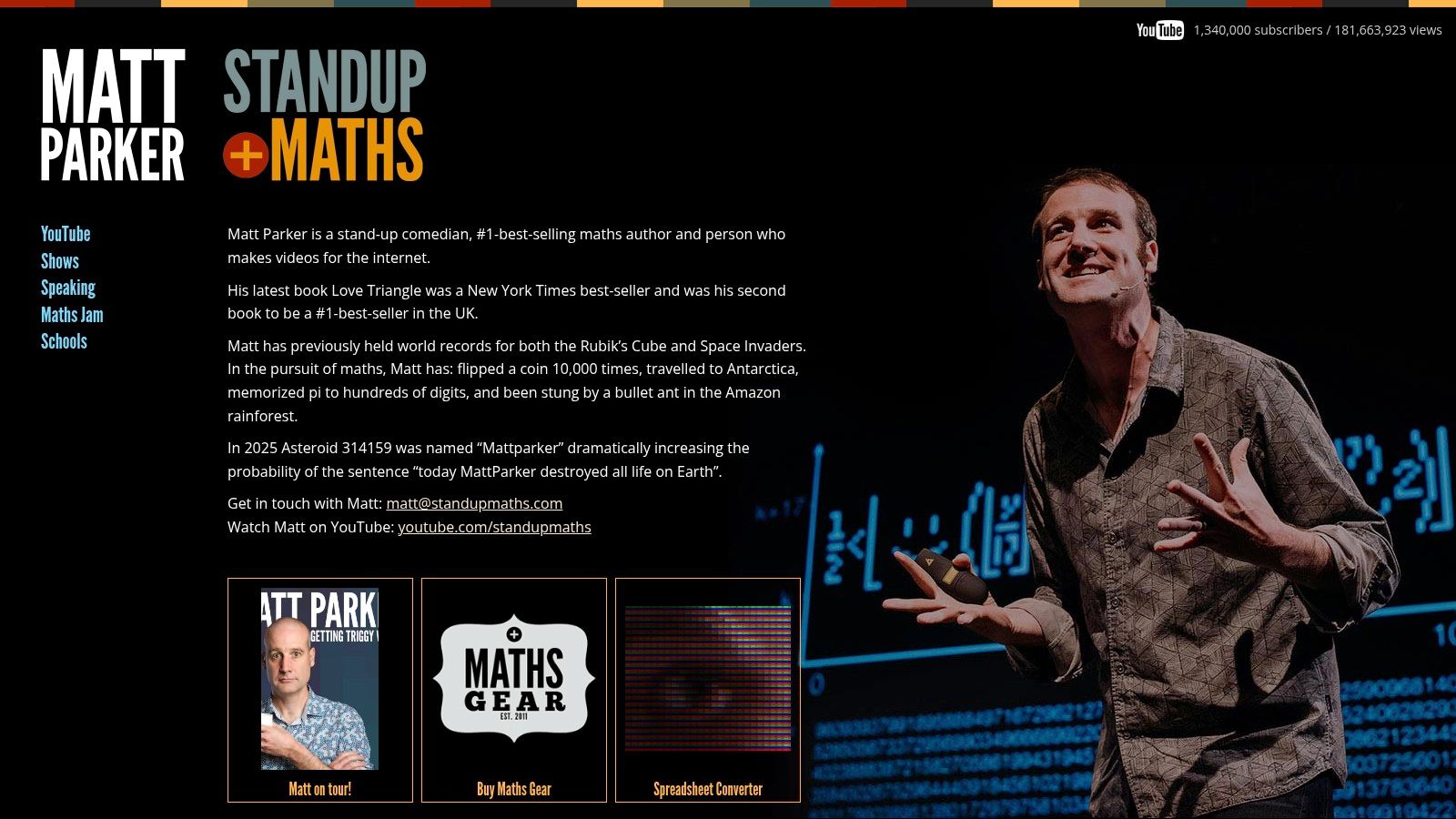
Matt Parker’s strength is simple. He turns mathematical ideas into investigations with personality. Spreadsheet mistakes, probability oddities, counting problems, real-world failures. You don’t just get an explanation. You get a reason to care.
Best for motivation and real-world hooks
This is the channel to use when school math feels detached from reality. Parker is especially good at showing how mathematical thinking shows up in systems, errors, and everyday decisions.
A smart way to use it:
- Watch one Stand-up Maths video before a harder study block.
- Let it create interest in a topic.
- Then move to a structured channel for formal practice.
This channel isn’t linear, so don’t expect a clean curriculum. Treat it as enrichment. It’s excellent for teachers, curious adults, and students who need a more human entry point into a difficult idea.
5. Mathologer
Mathologer rewards patience. If you like elegant arguments, rich visuals, and serious mathematical craft, this is one of the strongest channels available.
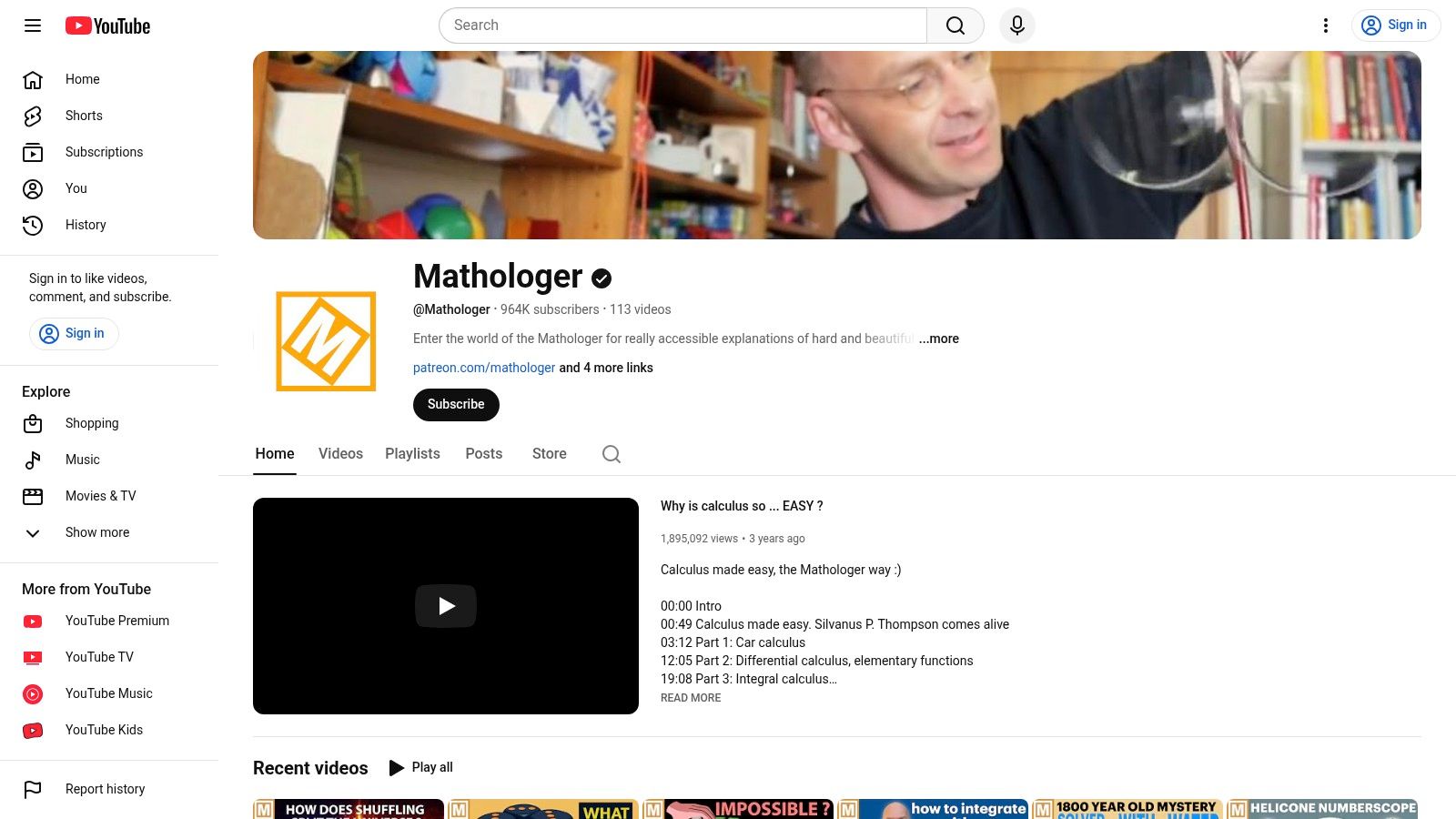
The tone is more rigorous than recreational channels, but it never feels dry. Geometry, number theory, infinity, topology, and classic theorems all get thoughtful treatment.
Best for serious enthusiasts
Mathologer works best when you already enjoy the subject and want to go deeper than standard classroom coverage. You’ll get proofs, historical framing, and careful structure.
Pick it if you want:
- Rigor without needless opacity
- Long-form enrichment
- A bridge from “I know the formula” to “I understand the theorem”
Don’t use it as your first stop for basic remediation. Use it once you’ve got enough comfort with notation to appreciate the reasoning.
The best learners often pair Mathologer with a notebook, not just headphones.
6. Eddie Woo
For calm, board-style teaching, Eddie Woo is one of the best math YouTube channels for high school students.
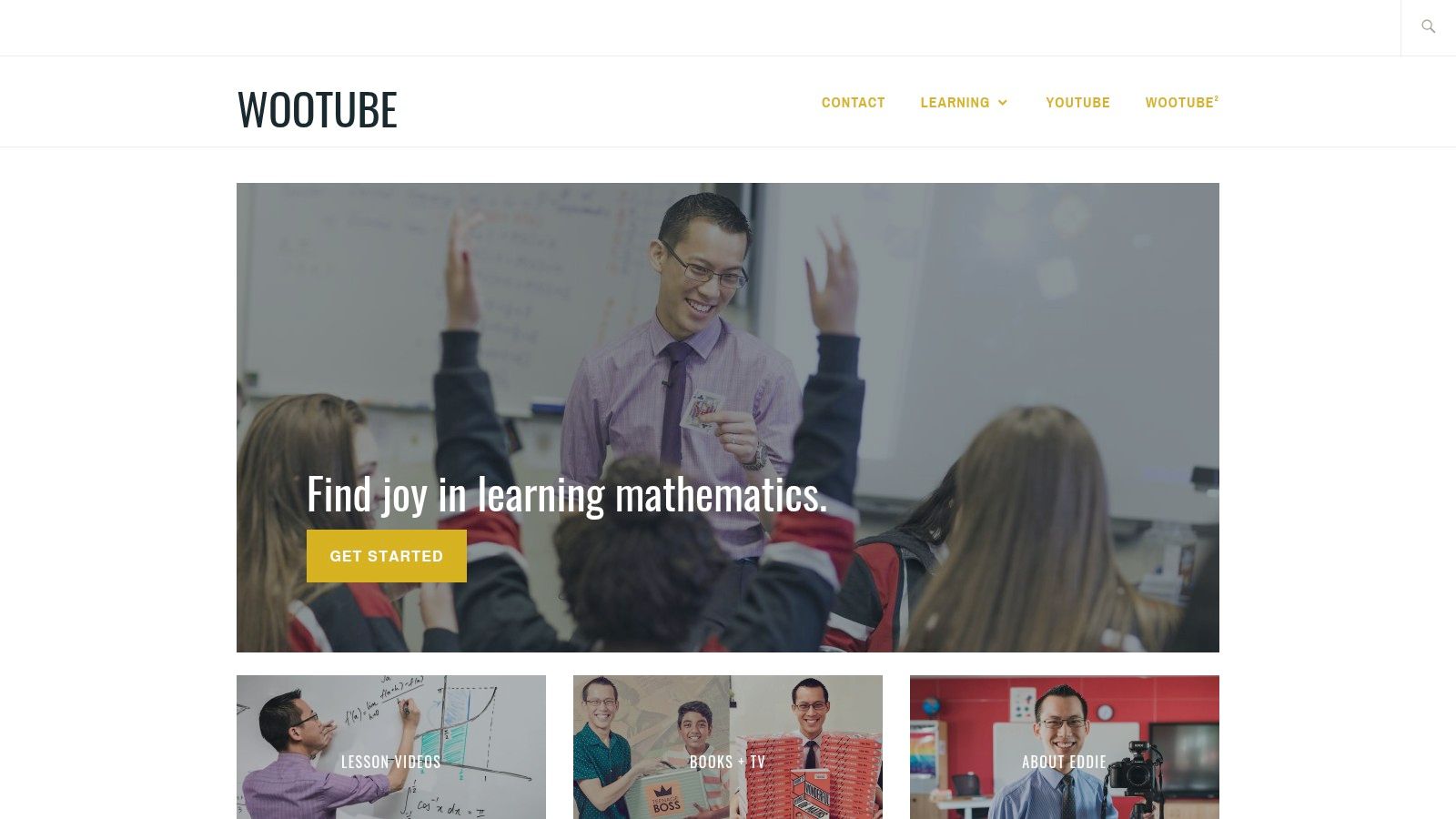
His classroom recordings feel like sitting in a good live lesson. He explains slowly, cleanly, and with the kind of patience that helps when you’re confused but don’t need flashy production.
Best for school math and exam review
Eddie Woo is strongest when you need steady walkthroughs of secondary-level topics. If you’re revising for tests, filling in weak spots, or teaching from similar curriculum maps, his playlists are easy to use.
What stands out:
- Clear pacing: Good for learners who need time to process.
- Board-first teaching: You can follow each step.
- Practical sequencing: Strong fit for topic-by-topic revision.
The tradeoff is that it’s less useful for advanced university theory. Still, if you’re working through school-level algebra, functions, or calculus basics, this is a reliable choice.
7. Professor Leonard
When you need a full college lecture, use Professor Leonard. Few channels match him for completeness.
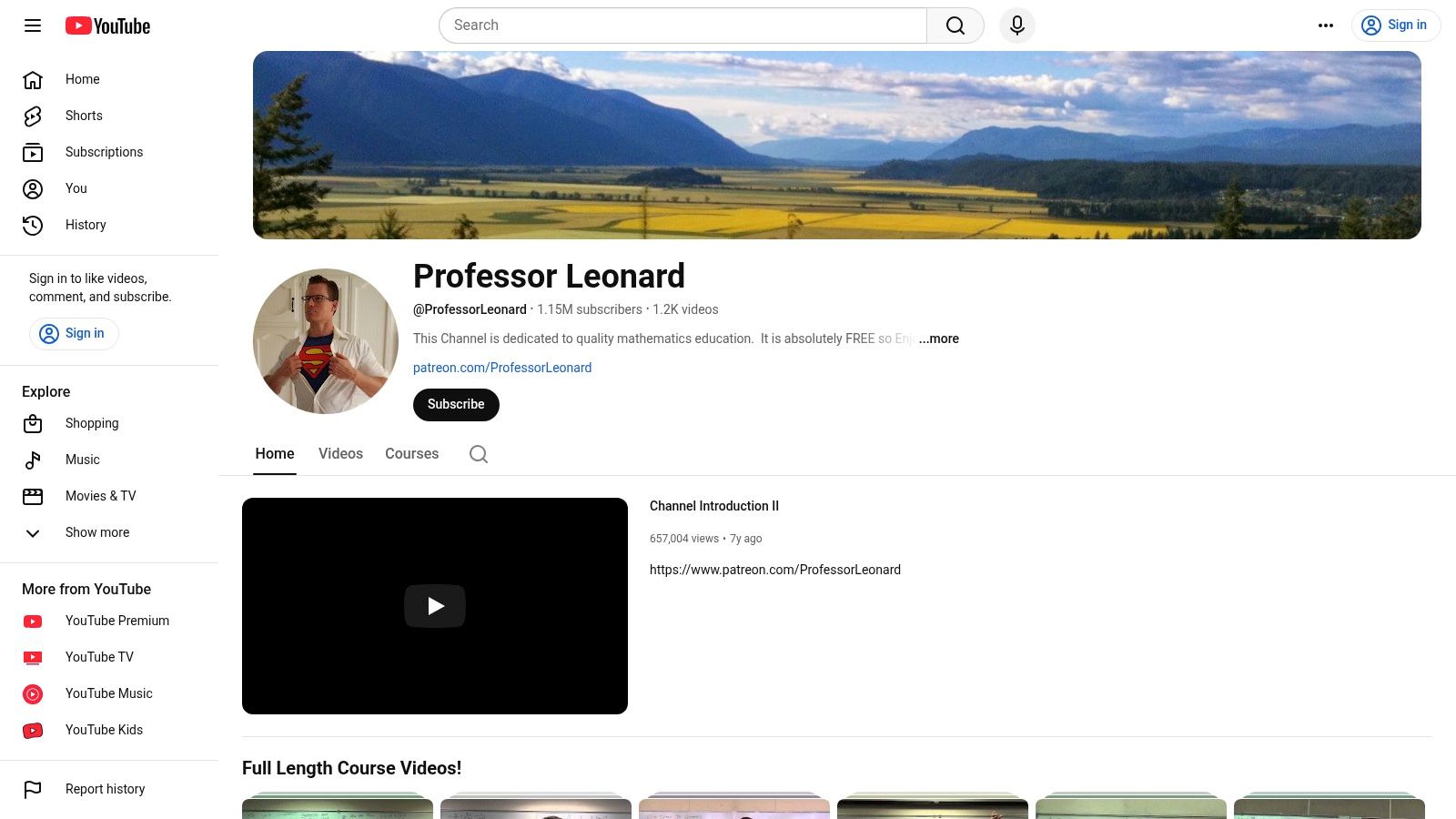
This is the opposite of short-form edutainment. You get chapter-level depth, many worked examples, and a traditional class feel. For precalculus, calculus, and differential equations, that’s a major advantage.
Best for college-level remediation and full-course learning
Use this channel when your class moved too fast or your textbook isn’t enough. Leonard doesn’t rush. He derives, explains, repeats key points, and builds from fundamentals.
Many busy learners, though, often get stuck. The lectures are long. That’s good for mastery, bad for fast review.
If you only need one method, one proof step, or one worked example from a long lecture, summarize the video first with PodBrief and jump straight to the useful section.
That workflow is especially effective before exams. Watch the short brief, identify the exact segment, then do the problem yourself.
8. Michael Penn
If you want proof skills, Michael Penn belongs on your shortlist.
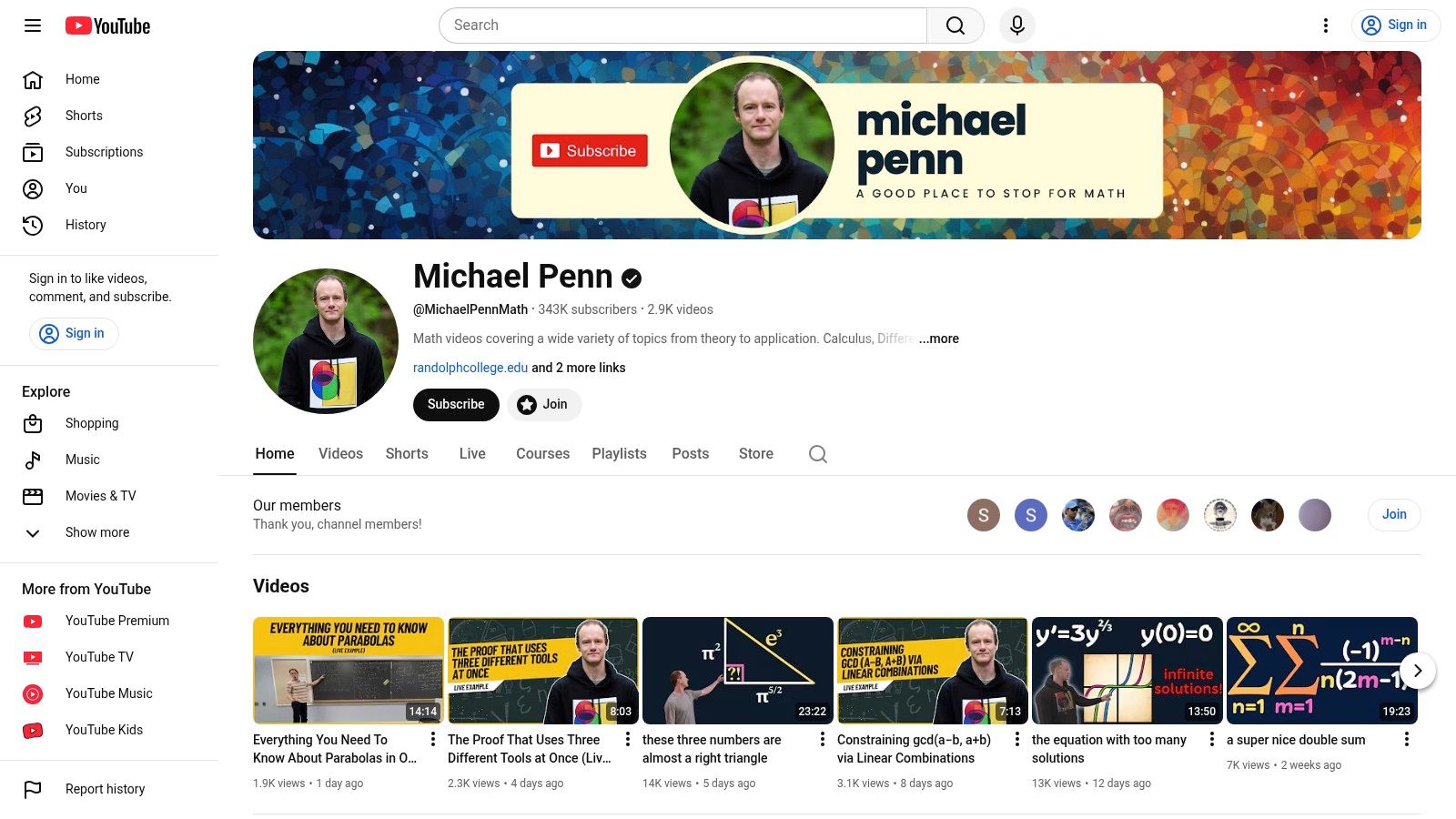
This channel sits in the sweet spot between approachable and advanced. You’ll see real analysis, abstract algebra, number theory, contest problems, and upper-level mathematical thinking explained on a whiteboard with minimal fluff.
Best for proof-based university math
Michael Penn is ideal once you’ve moved beyond procedural coursework. If your current challenge is “I can compute, but I can’t prove,” it's a valuable channel for dedicated study.
Use it for:
- Proof exposure: See how arguments are constructed.
- Advanced problem solving: Great for stretching your thinking.
- Upper-division prep: Useful before more formal coursework.
This isn’t early-stage learning. It assumes some maturity and tolerance for abstraction. But if that’s where you are, it’s one of the most efficient channels available.
9. blackpenredpen
Need reps? Use blackpenredpen.
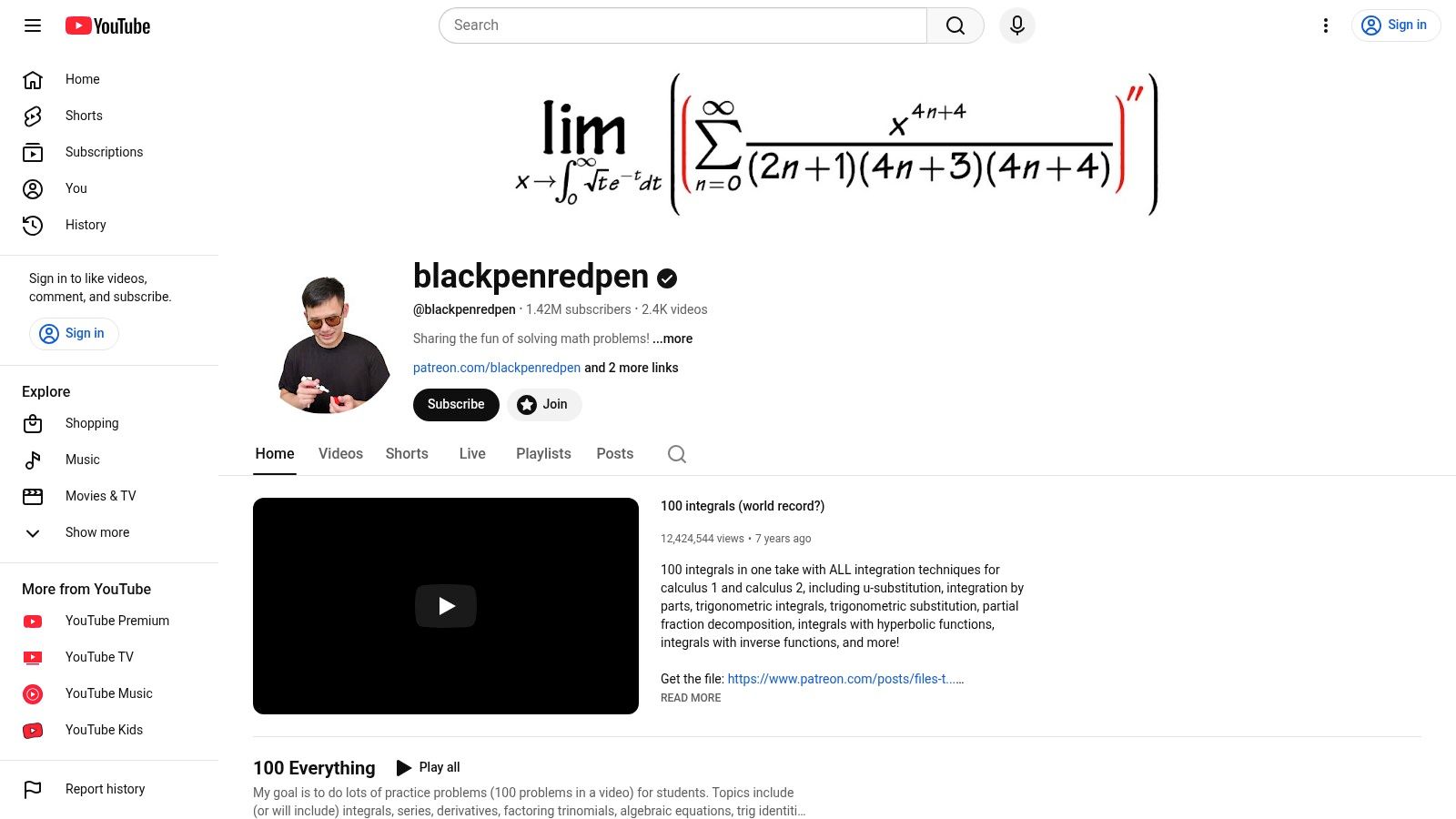
This channel is built for volume. Lots of problems. Lots of variations. Lots of calculus and algebra computation. If 3Blue1Brown gives you intuition, blackpenredpen gives you hand speed and procedural confidence.
Best for worked examples and computational fluency
This is the channel to use after you understand the concept but before the exam. You don’t need more theory. You need repetition with clear solutions.
A strong workflow:
- Step one: Learn the concept from a visual or lecture-based channel.
- Step two: Drill with blackpenredpen.
- Step three: Redo the same type of problem without looking.
Beginners may find the pace fast. That’s fine. Slow the video down and treat it like a guided worksheet. This is one of the most practical channels in the list for procedural improvement.
10. StatQuest with Josh Starmer
If your math goal touches statistics, machine learning, or data science, use StatQuest with Josh Starmer.
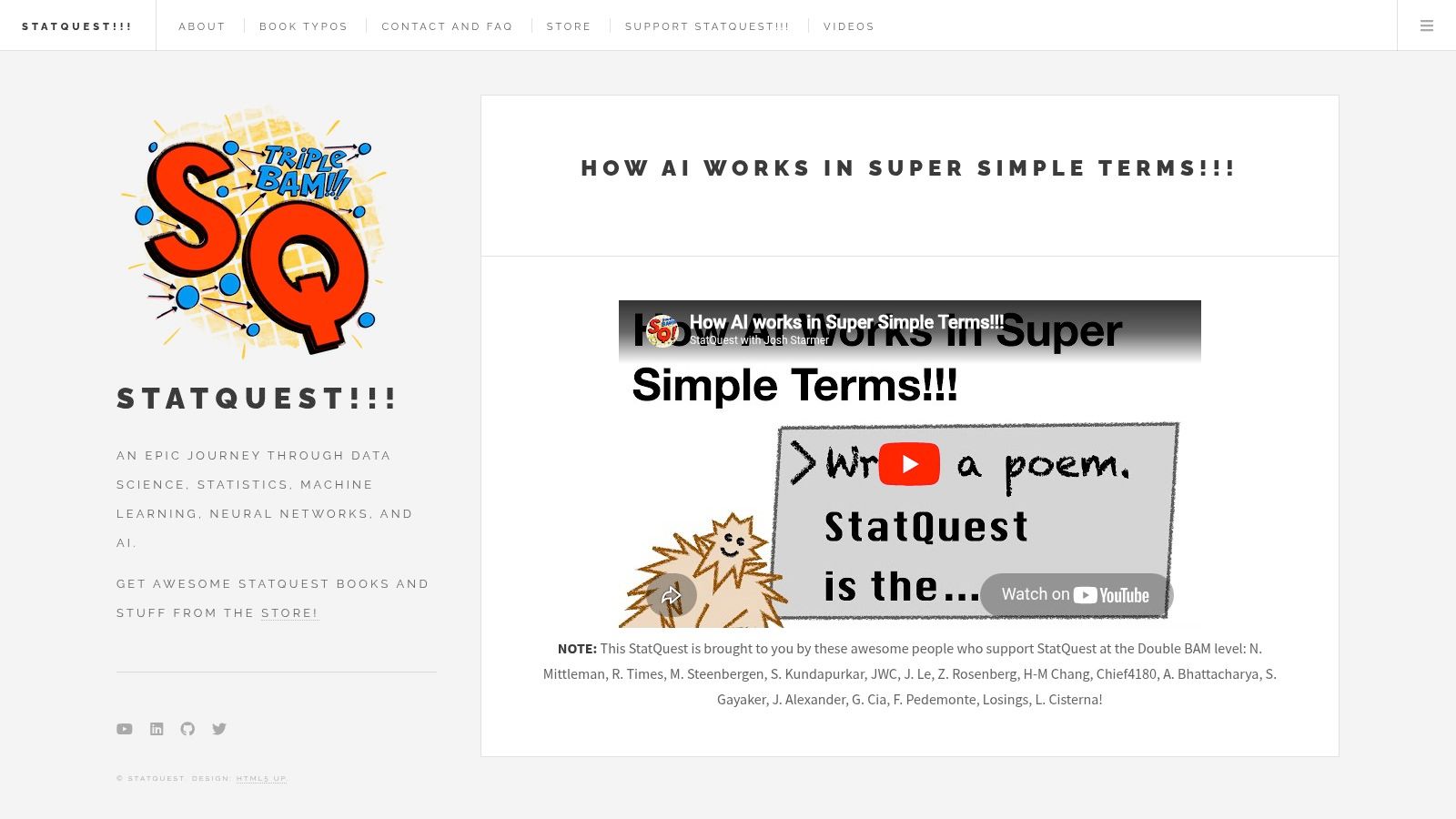
StatQuest is exceptionally clear. Josh Starmer breaks down difficult ideas in plain English, then layers in the math. That’s a rare teaching skill, especially in topics that often get buried in jargon.
Best for statistics and machine learning intuition
Pick StatQuest when you need to understand p-values, regression, classification methods, model logic, or core machine learning ideas without drowning in notation.
It’s especially useful for:
- Data science learners: Clear conceptual foundation.
- Professionals switching fields: Fast orientation to unfamiliar methods.
- Students in applied courses: Better intuition before code or formulas.
This isn’t a pure math channel. That’s the point. It translates quantitative ideas into usable understanding for modern applied work.
Top 10 Math YouTube Channels Comparison
| Channel | Key focus & features | Learning experience ★ | Value & access 💰 | Target audience 👥 | Unique strength ✨/🏆 |
|---|---|---|---|---|---|
| 3Blue1Brown | Signature visual animations; multi-video series | ★★★★★ | 💰 Free + patron support | 👥 Concept-driven learners, advanced HS & college | ✨ Geometric intuition; 🏆 iconic visuals |
| Numberphile | Bite-sized stories, interviews with mathematicians | ★★★★ | 💰 Free (donations) | 👥 Curious learners, casual fans | ✨ Story-led puzzles & research links |
| Khan Academy (Math) | Structured K–early college curriculum; exercises | ★★★★★ | 💰 Free (nonprofit) | 👥 Students, parents, teachers | ✨ Sequenced mastery + practice |
| Stand-up Maths | Entertaining real-world investigations & humor | ★★★★ | 💰 Free (Patreon) | 👥 Motivated beginners & enrichment seekers | ✨ Humor-driven curiosity boost |
| Mathologer | Proof-focused deep dives with visuals & history | ★★★★ | 💰 Free (donations) | 👥 Serious enthusiasts, advanced learners | ✨ Rigorous proofs with clarity |
| Eddie Woo (WooTube) | Classroom-style board lessons; exam playlists | ★★★ | 💰 Free | 👥 High-school students & teachers | ✨ Patient, classroom pedagogy |
| Professor Leonard | Full-length college lectures; worked examples | ★★★★★ | 💰 Free | 👥 Self-study college students | ✨ Course-complete lecture series |
| Michael Penn | Proofs, mini-courses, contest/problem focus | ★★★★ | 💰 Free | 👥 Upper-division students & competitors | ✨ Proof skill development |
| blackpenredpen | Fast-paced worked problems; challenge sets | ★★★★ | 💰 Free | 👥 Learners needing computation fluency | ✨ Volume of solved examples |
| StatQuest with Josh Starmer | Stats & ML explained simply with visuals | ★★★★★ | 💰 Free + books/resources | 👥 Data scientists, ML beginners | ✨ Plain-English intuition for algorithms |
A Smarter Way to Learn Your Action Plan
Watching math videos passively won’t get you very far. You need a method.
First, match the channel to the task. Use 3Blue1Brown for intuition. Use Khan Academy for sequence. Use blackpenredpen for repetition. Use Professor Leonard for full-course recovery. Use Michael Penn when you need proof technique, not just answers.
Second, watch with a pencil in hand. Don’t sit back and nod along. Pause. Predict the next step. Try the algebra before the instructor does it. If you want a practical framework for this, read PodBrief’s guide to the active recall study method.
Third, split your study into phases:
- Concept phase: Start with an intuition-first explanation.
- Procedure phase: Move to worked examples.
- Mastery phase: Re-solve problems without support.
- Review phase: Revisit only the parts you missed.
That last phase is where most learners waste time. Long-form lectures are powerful, but they’re inefficient to revisit. A full Professor Leonard lecture can run for hours. If you only need one derivation, one worked example, or one explanation of a tricky step, scrubbing manually is a poor use of your time.
Use PodBrief instead. Paste a YouTube link and get an AI-generated brief with the key ideas, examples, and structure of the lesson. That gives you a fast way to review a long lecture, decide whether it’s worth a full watch, or locate the section that matters for your exam or project.
That workflow also helps with channels outside formal coursework. Numberphile, Stand-up Maths, and Mathologer are excellent, but they often spark side trails. PodBrief lets you capture the core takeaway without losing an hour to exploration when your schedule is tight.
One more strategic point matters. The best math YouTube channels aren’t interchangeable. Stop asking which one is “best” in the abstract. Ask which one is best for the next hour of your study. That’s the question that saves time and improves results.
If you want a broader view of AI-assisted video summarization, this ultimate YouTube video summary AI guide offers extra perspective.
Your best next move is simple. Pick one channel for today’s problem. Pair it with active practice. Then use PodBrief to compress the long stuff so you can learn faster and review smarter.
Try PodBrief for free to turn long math videos into fast, useful study briefs. Paste a YouTube link, get the core ideas in minutes, and use your time on problem solving instead of endless rewatching.